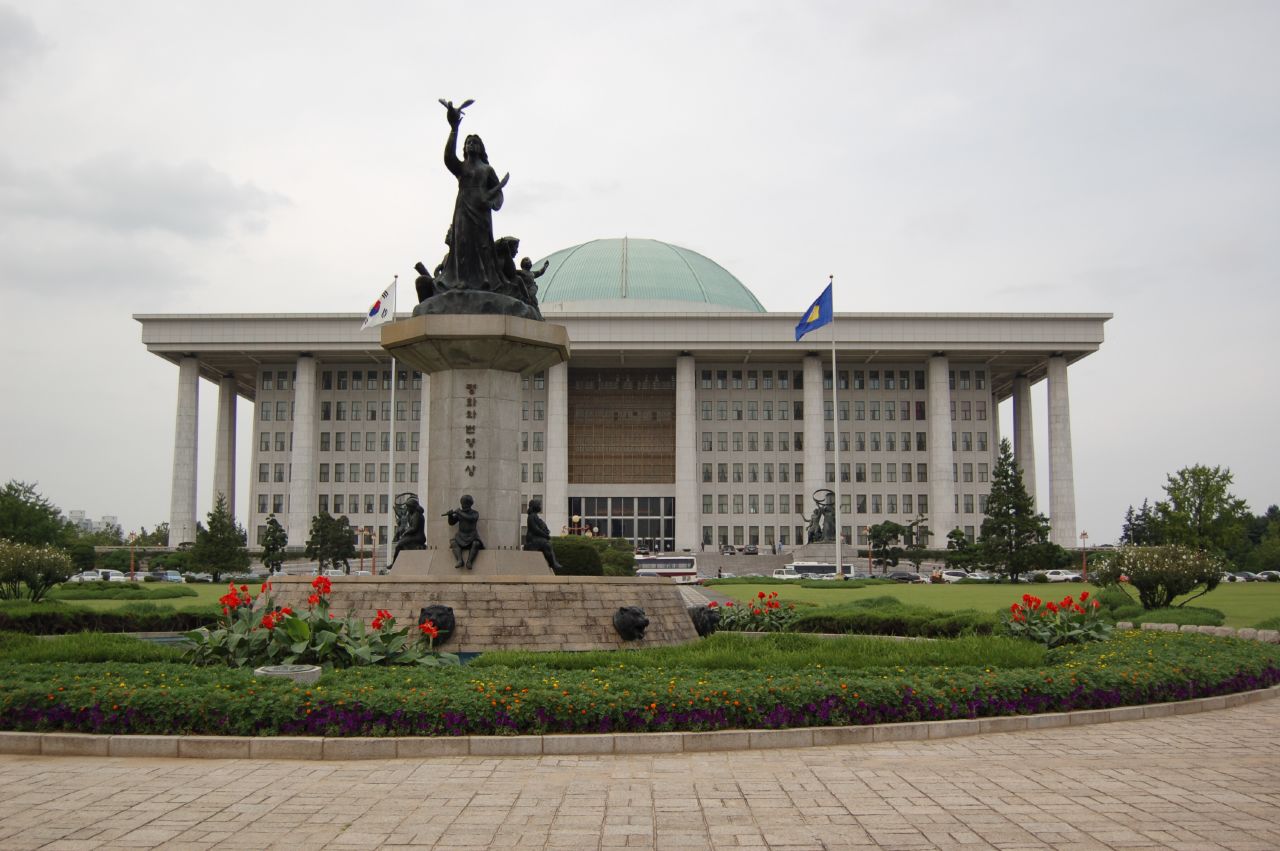
South Korea's National Assembly, the country's unicameral parliament, is responsible for approving government budgets, including supplementary ones introduced to address urgent national needs. The passage of such bills often involves intense debate and negotiation, particularly when the ruling party and opposition hold differing views on spending priorities.
The current political climate in South Korea is marked by a challenging period for President Lee Jae-myung (이재명), whose approval ratings have recently fallen below 50% for the first time since he took office. His ruling party, the People Power Party (국민의힘), has also experienced a decline in public support, reportedly due to alleged election management failures and internal conflicts. In contrast, the main opposition, the Democratic Party of Korea (더불어민주당), has seen a slight increase in its approval.
This shift in public sentiment and party strength likely contributes to the heightened scrutiny and debate over government spending. The objections raised by opposition parties regarding specific "welfare line items" in the revised supplementary budget reflect these ongoing political tensions and differing policy priorities within the National Assembly. The late-night vote suggests a difficult negotiation process, common when the government faces a strong opposition in parliament.