
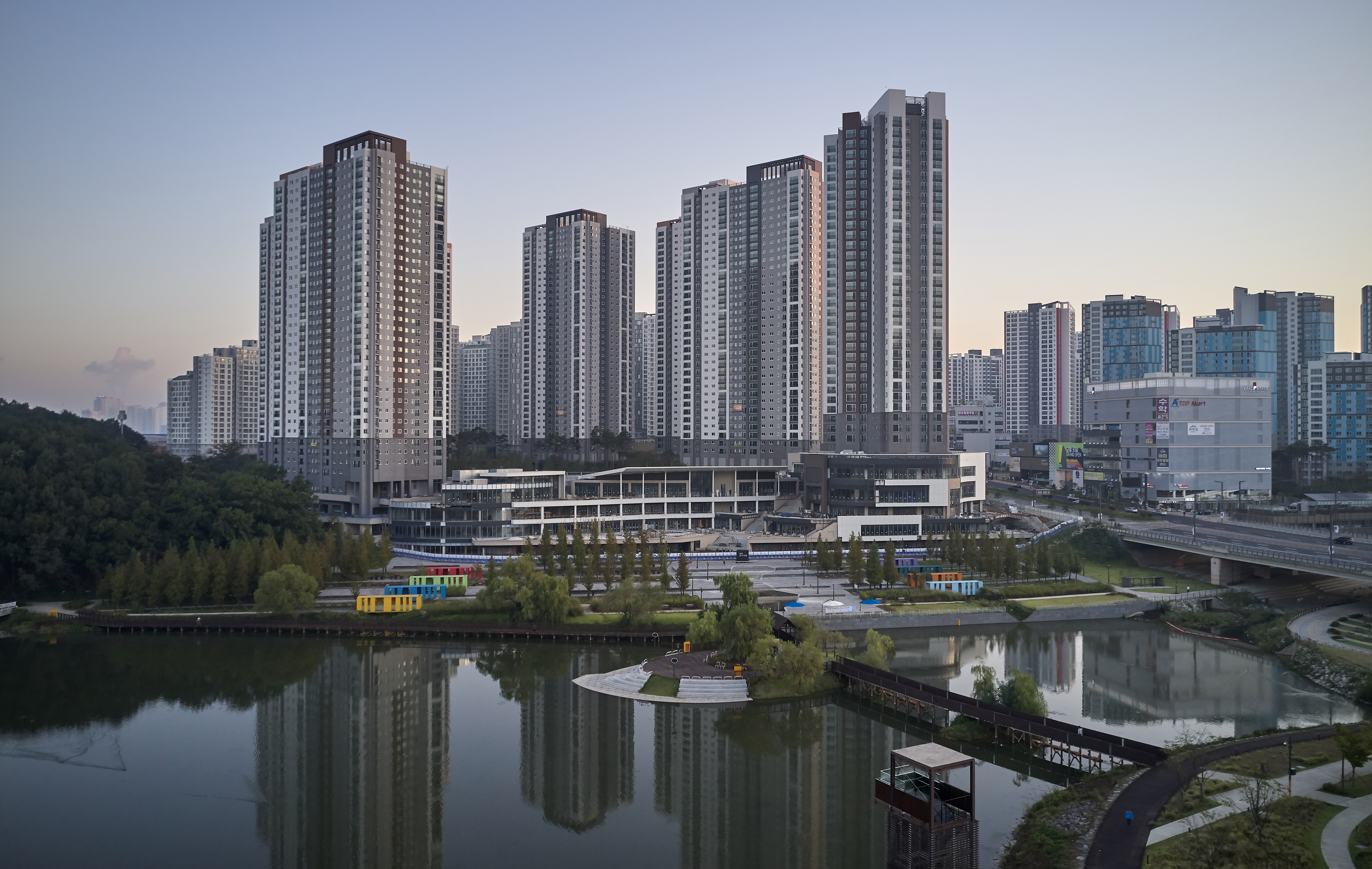
The South Korean government has designated Hwaseong's Dongtan-gu, Yongin's Giheung-gu, and Guri as 'speculation-overheated zones' and 'adjustment target areas,' effective July 1. Additionally, these regions will become 'land transaction 허가 zones' from July 5 until December 31, 2027, according to the Ministry of Land, Infrastructure and Transport (MOLIT) and Gyeonggi Province.
This move comes after a surge in home prices in these areas, which were previously unregulated. Dongtan-gu, in particular, saw a cumulative apartment price increase of 11.38% this year, the highest nationwide, driven by the semiconductor industry boom and expectations for improved transportation infrastructure like the GTX-A (Great Train eXpress-A) line. Giheung-gu experienced a 6.21% rise, and Guri-si, benefiting from its proximity to Seoul, saw a 7.87% increase, according to the Korea Real Estate Board.
Under the new regulations, homebuyers in these areas will be subject to stricter rules. Unoccupied homeowners, including those with one existing property contingent on its sale, will see their loan-to-value (LTV) ratio capped at 40%, down from 70%. The maximum loan amount will be tiered: 600 million won for homes under 1.5 billion won, 400 million won for homes between 1.5 billion and 2.5 billion won, and 200 million won for homes over 2.5 billion won. Multi-homeowners will face a 0% LTV, effectively barring them from new home loans in these zones. Furthermore, 'gap investment,' where a property is purchased with a tenant's deposit covering a significant portion of the price, will be prohibited, and buyers will be required to reside in the property for two years.
Transactions involving apartments exceeding a certain size (e.g., 6 square meters in residential areas) will require prior approval from the relevant city or district office. Failure to obtain approval or fraudulent approval can result in up to two years imprisonment or a fine of up to 20 million won. If the property's use deviates from the approved purpose, an annual enforcement fine of up to 10% of the acquisition cost may be imposed.
The government stated that these measures aim to curb speculative buying, protect genuine homebuyers, and address overheating in the housing market. The People Power Party, however, criticized the government, alleging that the regulations punish citizens for market conditions exacerbated by the administration's policies, arguing that the designated areas are not 'stabilized' but rather 'most-risen' in price.