
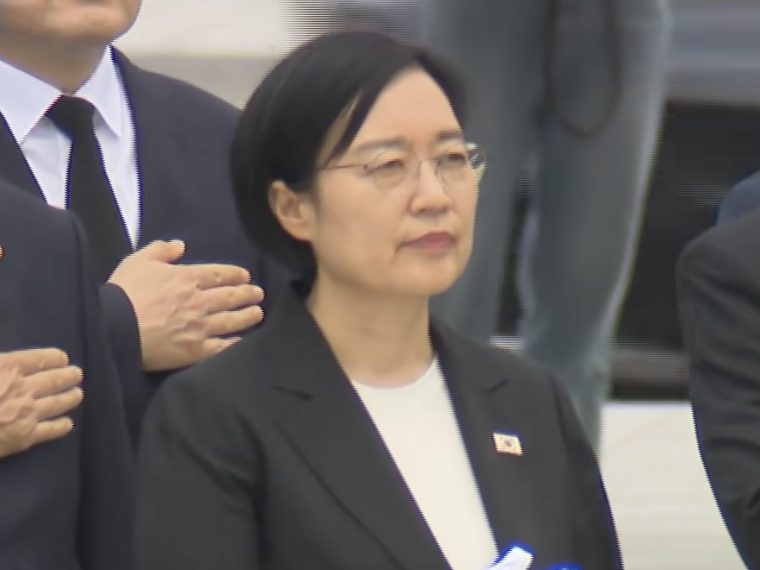
Han Seong-sook was sworn in as South Korea's 50th prime minister on July 1, receiving her appointment letter from President Lee Jae-myung at the presidential office before heading to the Government Seoul Complex in Jongno, central Seoul. Her first substantive act in the job was to chair an inter-ministerial meeting on artificial intelligence — a deliberate signal, according to Donga, that the administration intends to push what it calls an 'AI great transformation.'
Han is the second woman to hold the post in the country's history, following Han Myeong-sook, who was appointed in April 2006. She previously served as chief executive of Naver, South Korea's dominant internet platform, a background she framed as a reason for her selection. She told reporters on her way into the office that the moment calls for government and private industry to move at the same pace, and that she understands both languages.
Speed was the word of the day. She said government must accelerate to match the era, and pledged bolder investment in AI and advanced industries alongside active deregulation. The gains, she added, should reach ordinary citizens and give young people room to grow.
The AI ministerial session that capped her afternoon focused on three priority tracks: AI-powered public administration and services, physical AI (AI embedded in machines and robots), and opening government data to the private sector. Attending ministers included Bae Gyeong-hun of the Ministry of Science and ICT and Kim Jeong-gwan of the Ministry of Trade, Industry and Energy. Han said the government itself must become a capable platform, with civil servants using AI to lift their own productivity before expecting the wider economy to follow.
She also referenced the administration's so-called Three Mega Projects (a package centred on semiconductors, physical AI, and AI data centres) calling the day their investment plan was announced a milestone that would redefine the scale and pace of Korea's industrial and regional development.
Earlier in the day Han visited the National Seoul Cemetery in Dongjak to pay her respects, a customary stop for incoming senior officials. She also issued an emergency directive on flood preparedness, instructing the ministries of interior and climate, the Korea Forest Service, and local governments to tighten emergency-duty rosters and evacuation systems as the rainy season began on Jeju and in the southern regions, according to Newsis. The Korea Meteorological Administration was separately asked to issue repeated public alerts even for minor hazard signs.
Han's confirmation vote the previous day passed the National Assembly with 166 votes in favour and one invalid ballot. The main opposition People Power Party boycotted the vote, calling her an unfit appointee; Han, asked about the party-line passage, declined to comment on parliamentary procedure but said she remembered the encouragement she received during her confirmation hearing and intended to justify it.