
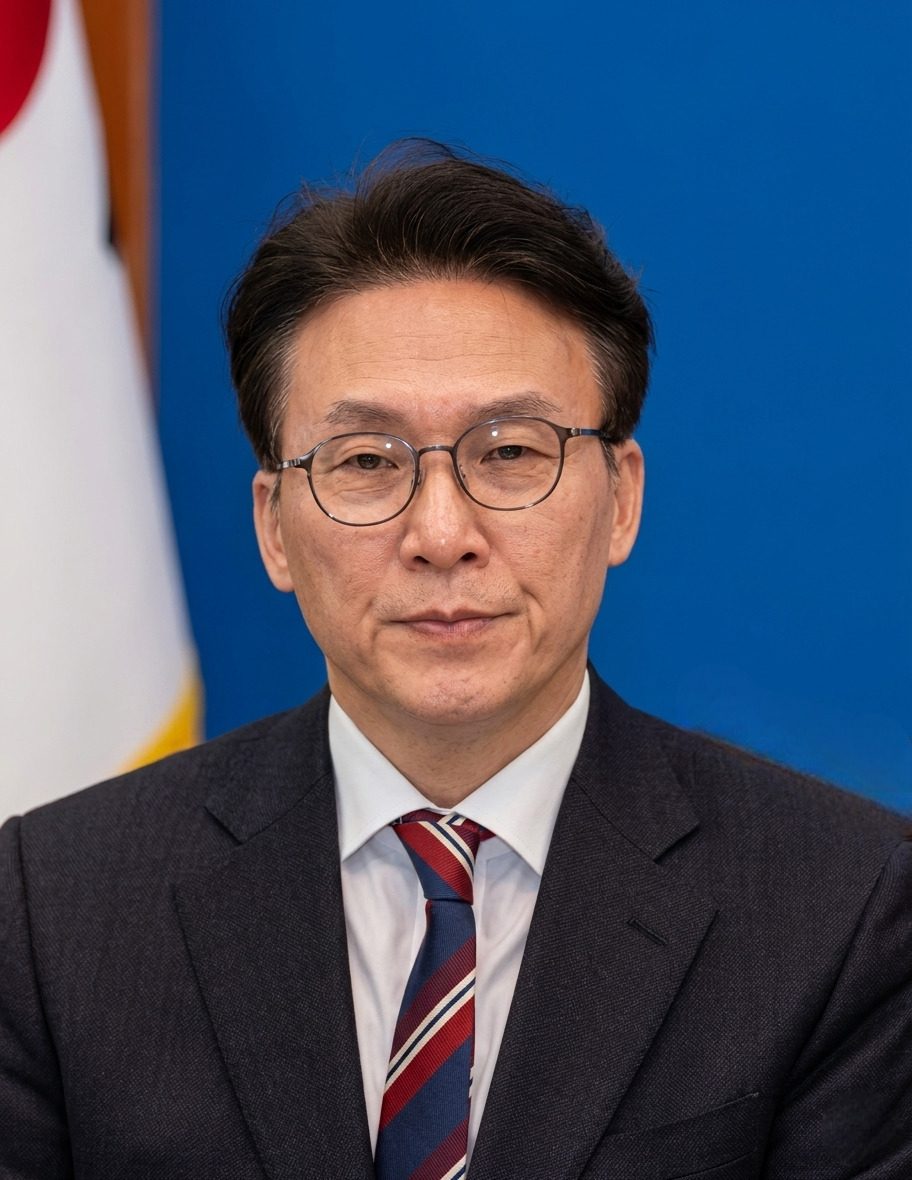
Kim Min-seok, who served as South Korea's first prime minister under President Lee Jae-myung before stepping down last month, formally declared his candidacy for leader of the Democratic Party of Korea on July 6, becoming the first of the three main contenders to do so.
He opened the day at the National May 18 Democratic Cemetery in Gwangju, the southwestern city that stands as the symbolic heartland of the party, before announcing his candidacy at Jeonil Building 245, a structure that still bears bullet marks from helicopter fire during the 1980 pro-democracy uprising. An afternoon press conference followed at the National Assembly in Seoul. The choice of Gwangju was deliberate: roughly a third of the party's rights-holding members, who will cast the decisive ballots, are concentrated in the Honam region.
Kim is expected to frame his candidacy around stability and support for Lee's government, positioning himself as the president's natural interlocutor. He plans a series of four public forums on themes including support for the administration's three flagship regional development projects, youth outreach, and the party's embrace of artificial intelligence.
Jung Chung-rae, the former party leader whose candidacy is widely anticipated, has taken a quieter approach: visiting the birthplace of the late former President Kim Dae-jung and the tomb of the late former President Roh Moo-hyun while posting pointed questions on Facebook about who championed the new one-member-one-vote rule and who backed abolishing prosecutors' supplementary investigative powers.
Song Young-gil, a lawmaker who has publicly criticised Jung, was weighing when to enter the race, with his camp telling SBS that the timing would depend partly on Jung's own declaration.
The structural backdrop matters. This is the first Democratic Party leadership election run under a strict one-member-one-vote system, which strips away the roughly 17-fold weighting that delegates previously enjoyed over ordinary members. Campaign strategy has shifted accordingly: large legislator-centred campaign teams are out; social-media outreach to a rapidly growing pool of online members is in. Candidate registration is scheduled for July 16 and 17, with the election set for August 17.
A subsidiary dispute over whether to add age or regional weighting to the new system has opened another front. Jung opposes additional weightings; Kim and Song have both floated the idea of generational adjustments, according to Kookmin Ilbo. The party's convention preparatory committee was set to discuss the question at a meeting on July 7.