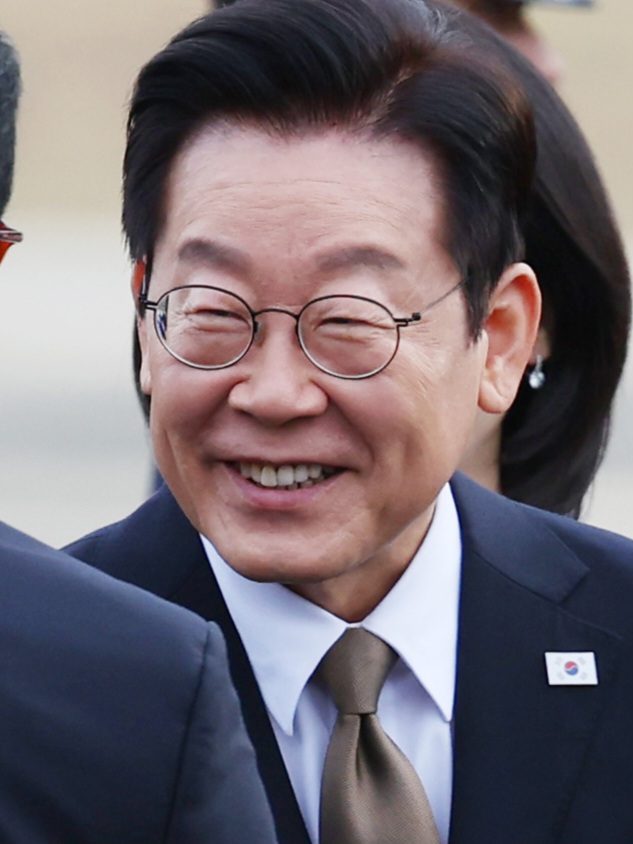
President Lee Jae-myung's approval rating stopped falling after seven consecutive weeks of decline, according to a poll published on July 6 by Realmeter, a South Korean survey firm, on behalf of the Energy Economy newspaper.
The survey, conducted June 29 through July 3 among 2,525 adults aged 18 and older nationwide, put approval at 47.0%, up 0.5 percentage points from the previous week. Disapproval stood at 49.2%, down 0.3 points, leaving the two figures within the poll's margin of error of plus or minus 2.0 points at the 95 percent confidence level. The gap of 2.2 points means the president remains in negative territory for the third consecutive week. Realmeter noted that the government's three regional mega-investment programmes, covering the southwest, Chungcheong, and Yeongnam areas, provided a positive signal, but that falling share prices and a high exchange rate limited the gain.
Approval was highest in the Jeonnam-Gwangju and Jeonbuk region at 74.8% and lowest in Daegu and North and South Gyeongsang at 35.7%. Among age groups, those in their 30s rose 4.3 points and those in their 60s rose 2.6 points, while respondents in their 20s fell 4.2 points.
A separate party-support survey, conducted July 2 and 3 among 1,008 adults, found the Democratic Party at 43.0%, up 2.0 points, and the People Power Party at 40.3%, down 1.7 points. The margin of error for this survey was plus or minus 3.1 points. The two-party gap widened to 2.7 points but remained inside the margin of error for a third straight week. The Democratic Party had trailed the People Power Party by small margins for roughly three weeks before this reversal.
Realmeter attributed the Democratic Party's rise to centrist voters drawn toward the government's regional investment pledges, and the People Power Party's decline to internal leadership tensions and what the firm described as a hardline response to the Honam investment announcement, which it said contributed to defections among conservative supporters in the Daegu and North and South Gyeongsang region.
Smaller parties polled at: the Reform Party 3.0%, the Cho Kuk Innovation Party 1.9%, and the Progressive Party 1.6%. Independents accounted for 6.5%. Both surveys used 100 percent wireless automated-response sampling. The response rate for the presidential approval survey was 4.0%; for the party survey, 2.8%.