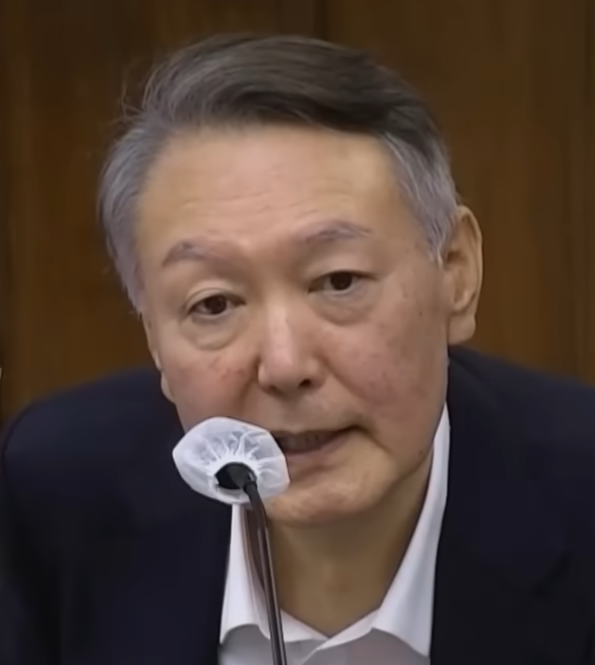
South Korea's Supreme Court on July 9 upheld a seven-year prison sentence for former President Yoon Suk-yeol, sealing the first final criminal judgment against him stemming from his short-lived declaration of emergency martial law on December 3, 2024, some 583 days after that declaration.
The Supreme Court's Third Division, presided over by Justice Lee Heung-gu with Justice Lee Suk-yeon as the reporting judge, dismissed appeals by both the defence and the special prosecution team, leaving the appellate court's ruling intact. Yoon was convicted on charges of obstructing the execution of arrest warrants by deploying Presidential Security Service personnel, abusing official authority by convening only a subset of cabinet ministers before the martial-law declaration (thereby denying nine ministers any deliberative role), ordering the fabrication and subsequent destruction of a false martial-law proclamation document, directing the distribution of a press guidance note containing false claims to foreign media, and instructing that investigators be blocked from accessing encrypted phone records.
The court also resolved a core legal question that had shadowed the entire case: whether the Corruption Investigation Office for High-ranking Officials (CIO), the specialist anti-corruption body that first moved to arrest Yoon, had lawful authority to investigate insurrection charges. The court ruled it did. Article 84 of the Constitution bars criminal prosecution of a sitting president except for insurrection or treason, but the court held that this provision does not amount to a blanket prohibition on investigation. Because the insurrection charge overlapped factually with the abuse-of-authority offence that the CIO was already investigating, the court said the office had a 'direct connection' to the insurrection matter and therefore jurisdiction over it. The court similarly rejected the defence argument that security-service resistance made the warrant execution unlawful, noting that the presidential security chief offered no specific legal grounds for refusal and that no threat to vital state interests had been demonstrated.
The lower court had sentenced Yoon to five years at first instance in January 2026; the Seoul High Court raised that to seven years in April, still short of the ten years sought by prosecutors. Both sides appealed, and the Supreme Court dismissed both.
Yoon's legal team said it expressed 'deep regret' that the court had closed the case without sufficiently thorough deliberation, and announced plans to challenge the ruling through constitutional complaint procedures. The CIO said the ruling confirmed that criminal-justice processes had operated according to constitutional and legal norms even in a national crisis.
Yoon had already lost his former-president perquisites following the Constitutional Court's impeachment ruling in April 2025; the confirmed prison sentence reinforces that status. He is the fifth former president since democratisation to receive a final guilty verdict, joining Chun Doo-hwan, Roh Tae-woo, Park Geun-hye, and Lee Myung-bak. Seven further criminal cases against him remain in progress, with two additional first-instance verdicts expected later in July.